Vous avez demandé, alors voici!
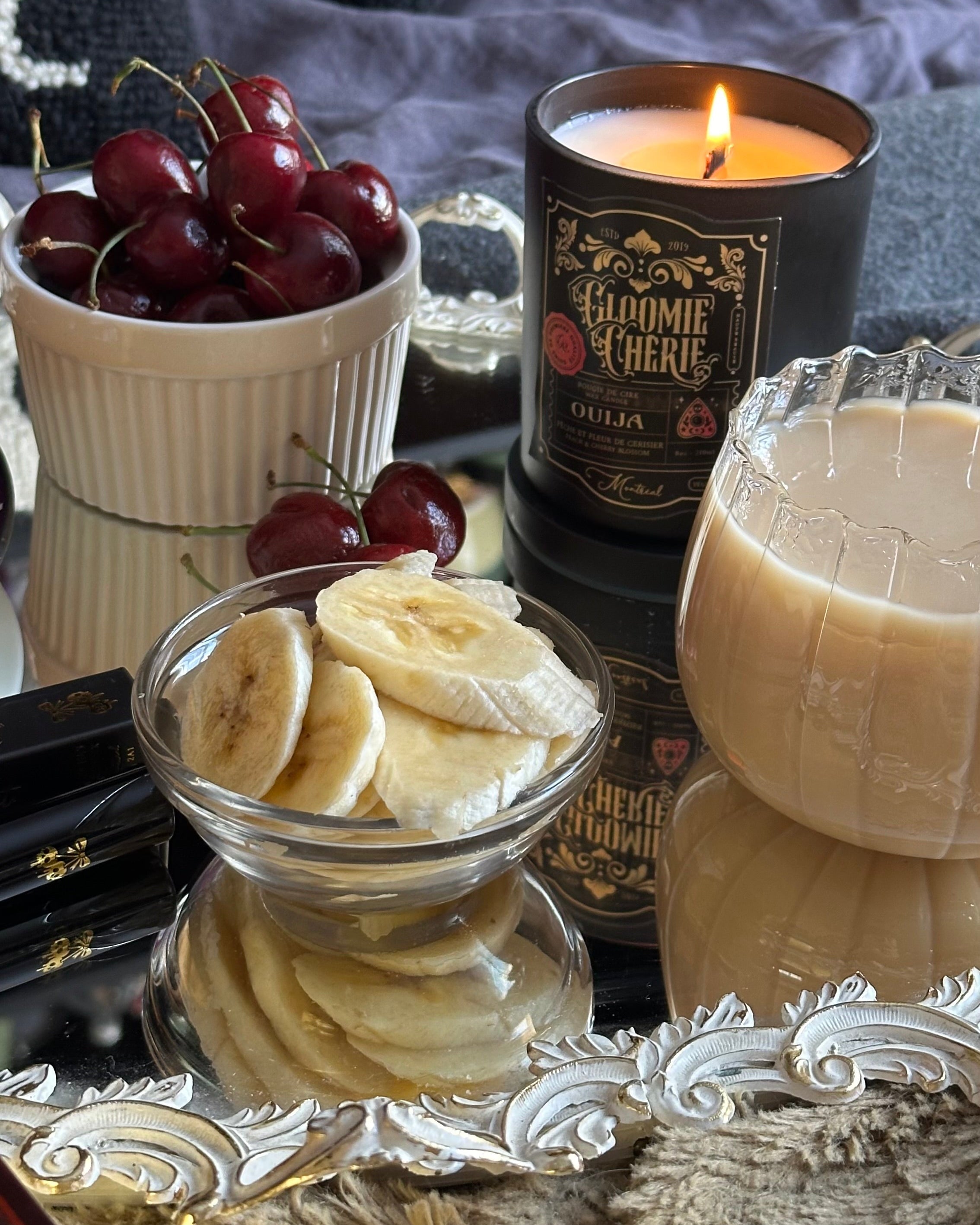
Il est fortement recommandé d'écourter vos mèches à 1/4po avant chaque utilisation, et voici pourquoi! Lorsque vous ne le faites pas, vous avez plus de chances que votre mèche soit trop longue et devienne molle (haha!) et décide de se cacher dans la cire, ce qui fait que vous ne pourrez plus allumer votre chandelle une fois que la cire aura refroidie. C'est problèmatique ça! Aussi, lorsque votre mèche est de la bonne longueur, vous consommez moins de cire parce que votre pot est pas aussi chaud que si votre mèche est grande et votre flamme, imposante. Vous consommez moins de cire, votre chandelle dure plus longtemps!! Et vous réduisez les chances que votre pot devienne noir à cause de votre flamme.
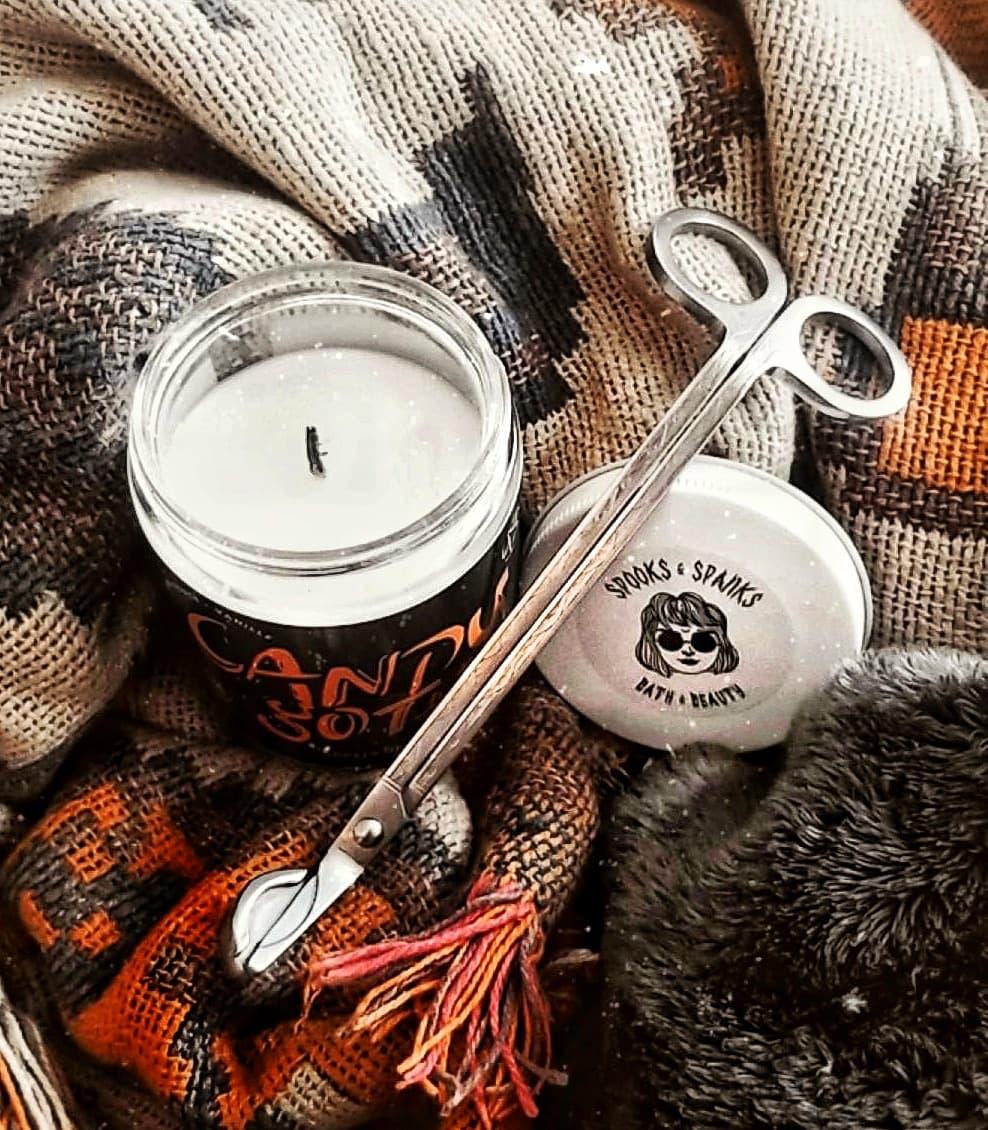
LA MÈCHE COURTE!
Related Posts

Why You Shouldn’t Trust DIY Sunscreens, “Chemical-Free” Claims, or Unregistered Products
The world of skincare is full of buzzwords like natural, clean, and chemical-free. They sound comforting, but they don’t tell you much about whether a product is actually safe or effective. In fact, sometimes they can be red flags. Let’s take a closer look at why small businesses shouldn’t make sunscreen, why “natural” isn’t a magic word, why “chemical-free” is impossible, and why health department registration is so important. Sunscreen is not just another cosmetic Sunscreen isn’t like soap or body butter. In most countries, it’s treated as a drug or therapeutic product because it makes a health claim: protecting you from skin cancer and sunburn. In Canada, sunscreens need government approval before sale (a DIN or NPN from Health Canada). They must go through strict lab testing to prove their SPF and UVA protection really work. In the U.S., sunscreens are over-the-counter drugs regulated by the FDA. They must meet official testing standards and drug labeling rules. In Europe, sunscreens are cosmetics, but only approved UV filters at specific levels can be used, and each product has to be safety-assessed and filed in the EU system. Making a safe sunscreen is not something you can do in a kitchen or small studio. Studies have shown that most “homemade sunscreen” recipes online don’t actually protect the skin, even when they’re marketed as if they do. That’s dangerous because it gives people a false sense of security in the sun. Why do people say “natural = good” and “chemicals = bad”? This way of talking comes from marketing psychology more than science: We’re wired to think “natural” means safe and healthy. But nature also gives us poison ivy, mercury, and cyanide. Companies know people like the word “natural,” so they use it as a selling point—even though it has no legal definition in cosmetics. The word “chemical” sounds scary, but the truth is everything is made of chemicals, water, oxygen, jojoba oil, vitamin C. Calling something “chemical-free” is simply not true. It’s important to be cautious when brands use these words. A product’s safety doesn’t depend on whether an ingredient is natural or synthetic, it depends on how it’s studied, how it’s regulated, and how it’s used in the formula. How regulators protect you When the FDA, Health Canada, or the EU look at ingredients, they take a very cautious approach. If an ingredient shows even a tiny and insignificant risk in studies, regulators flag it. If the risk is serious, the ingredient gets banned. If the risk is only at high doses, the ingredient gets a concentration limit (for example, “allowed up to 1%”). Something most do not know is that if we use the example above and use that ingredient at 1% maximum, the true threshold can be 10% to be safe, but governments keep the limit at 1% because we don't need it at 10% and this way, they ensure absolute safety. If the ingredient is safe at the levels used in cosmetics, it stays allowed. This means that by the time an ingredient reaches your lotion, cream, or lipstick, it has already gone through layers of safety evaluation. Why product declaration is so important Responsible brands can’t just throw ingredients together and start selling. In Canada, every cosmetic must be filed with Health Canada using the Cosmetic Notification Form within 10 days of first sale. This form requires brands to list every ingredient and the exact percentages used. In the U.S., sunscreens must follow the FDA’s drug rules and now, under MoCRA, even non-drug cosmetics must be listed with the FDA since 2022. In the EU, all products need a safety report and must be registered before sale. If something is wrong, say, an ingredient is banned or used at too high a level, the health department has the power to order the product off shelves immediately. This protects you, the consumer. Common myths, busted “Raspberry seed oil has SPF.” No oil can replace real sunscreen. They don’t provide reliable UV protection. “Natural means safe.” Poison ivy is natural. So is lead. “Small brands use good ingredients, big brands use bad ones.” In reality, all companies must follow the same ingredient rules. Safety depends on compliance, not company size. What responsible small businesses do We register our formulas with Health Canada, listing every ingredient and percentage. We don’t make ''handmade'' sunscreen, because doing it properly requires drug approval and specialized testing. We’re honest about our products, we avoid “chemical-free” claims and always use proper ingredient names on our labels. Takeaway for shoppers Don’t buy sunscreen from a small business unless it has official approval (like a DIN or FDA listing). Be skeptical of “chemical-free” and “all natural” claims, they’re marketing, not science. Support brands that follow the rules, register their products, and communicate transparently. Good skincare isn’t about buzzwords. It’s about evidence, safety, and honesty.
Learn more
💔 Why Bother Buying Handmade? A Small Business Owner’s Honest Thoughts
Recently, Walmart released customizable heart-shaped cakes for $25. They’re cute, they look good in photos, and they’re accessible for many people during a tough economy. It’s no wonder they went viral. But what followed wasn’t just applause for affordability. It was criticism—especially of small businesses.Criticism like: “Small businesses overcharge.”“They’re selfish for selling the same thing for more.”“No wonder people don’t support handmade anymore.” And I get it. We’re all feeling the weight of inflation. Groceries are expensive. Rent is brutal. People want to enjoy something nice without spending a fortune. So when a cake from Walmart looks just as beautiful as a $75 one from a local baker, people understandably ask: “Why pay more?” Lately, I’ve been asking myself the same thing. Is Handmade Even Worth It Anymore? Why would anyone choose to support my handmade business, when you can walk into Lush, a pharmacy, or even Walmart and get something similar for a lower price? This question has been living rent-free in my head for weeks now. It feels selfish to run a small business when so many people can’t afford it. I’ve seen friends avoid liking my posts and get upset at me for taking it to heart when some people complain about pricing of handmade items, as if what I do isn’t worth supporting. I’ve had people ask for discounts, or worse—complain that my prices are unreasonable. And yet, here I am. Still showing up, still making things with my hands, still replying to your DMs at midnight. Still struggling as much, if not more than, as you to pay for rent. Handmade Isn’t About Scarcity. It’s About Soul. People don’t only support small businesses because they can’t find the product somewhere else. They care about the extra detail, the higher quality, the intentionality behind the ingredients, the ethics behind the brand, and the story behind every label. I make soap, but I also donate it. For every 10 bars I make, I give 1 to a shelter. And I make a lot of soap. Up to now, I’ve given 100lbs+ of soap, thousands in dollars worth.I support pollinators by sponsoring beehives, and use some of that honey in my formulas.I’m not just making things—I’m trying to give back, to create something more human in a world that often feels disconnected. Soon enough, I’ll find a way to support mental health causes as well. So when someone says: “Your stuff is too expensive.” It doesn’t just sting—it wounds.Because it’s not just about the price.It’s about the value.It’s about the message that this isn’t worth it. That the love and care and endless nights I put into my craft is not worth it. That I should give up and get back in line and find a « normal » job. The Real Cost of Handmade Let me be honest: most of us are undercharging.We do it because we feel guilty, or because we want to be accessible.We feel like we have to justify every dollar, even though: We buy high-quality, safe ingredients We package, label, photograph, market, and ship everything ourselves We spend hours testing formulas, answering messages, creating content, fixing tech issues And yet, many of us are making less than minimum wage for the work we do. This isn’t just a business. It’s an act of love. Of resilience. Of showing up for a community that we feel incredibly lucky to serve. So Why Should Anyone Support a Small Business? Maybe you’ve asked yourself this.Maybe you’ve rolled your eyes at a $40 candle.Maybe you think we should “get over it” when people say our stuff is too expensive, and maybe you think we should step down and think to ourselves « who do I think I am to charge so much ». Let’s look at the facts. 📊 The Numbers: Why Small Businesses Actually Matter 💡 What They Do 📈 Real Stats Fuel the economy 99.9% of all businesses in the U.S. and Canada are small Create jobs 46.4% of U.S. private sector jobs; 63% in Canada Support local causes Donate 250% more to nonprofits than large corporations Keep money local $68 of every $100 spent at a local business stays local (vs. $43 at chains) Innovate more 16.5x more patents per employee than large firms Power the global economy 50%+ of global employment comes from small businesses (World Bank) Serve better 71% of consumers say they get better service from small businesses Every time you support a small business, you’re supporting more than a product.You’re supporting: A dream A family A community A cause You’re making the world less gray. Less corporate. Less soulless.You’re saying, “I believe in this human. I believe in what they do.” And If You Can’t Afford to Support Right Now, That’s Okay. Really. I get it. If you buy the Walmart cake, or a bath bomb from the pharmacy, that doesn’t make you a bad person.But please don’t say we charge too much.Please don’t act like small businesses are selfish for trying to survive. Because we are not just selling things.We are creating art, experiences, and community. Every item has a story.We are trying to make the world more human, with better values, and better care. We aren’t pricing things unfairly. In fact, many of us should be charging more for the quality, time, and soul we put into what we do. Final Thoughts Without small businesses, the world would lose its color.Its creativity.Its empathy. So if you’ve ever supported a small business—thank you.And if you’ve ever wondered why you should? The answer is simple:Because when you support handmade, you’re not just buying a product.You’re investing in people.You’re choosing heart over habit.And you're keeping the world a little more human.
Learn more
A Heartfelt Farewell: Embracing New Beginnings
Hello, dear friends and supporters of Spooks & Spanks, Yesterday was a truly memorable day as we celebrated our last market and event at our beloved Ville-Émard location. It was an incredible experience filled with joy, community, and a touch of nostalgia. From 11 AM to 4 PM, the atmosphere was buzzing with excitement, and I barely had a moment to myself. The support and love you showed were beyond cherished. The event was graced with delightful treats, including free ice cream courtesy of GaGaGlaces, who will be taking over the space in March. Their generosity extended to the community, and I am immensely grateful for their kindness. The day was also filled with amazing vendors, offering unique and captivating products that added to the vibrancy of the event. As I prepare to leave Ville-Émard, I am filled with mixed emotions. This neighborhood has been an integral part of Spooks & Spanks' journey since 2019, and it will always hold a special place in my heart. It’s where our story began and where we grew together. Though I am sad to leave, I am excited for the bigger and better opportunities that lie ahead. Looking forward, I am eager to embrace new launches, expand our productions, and participate in more conventions. I am determined to rebuild what was lost on social media and reconnect with the incredible community that once thrived there. For those who wish to continue picking up their orders, you can still do so at 5929 Monk Boulevard. I extend my heartfelt thanks to GaGaGlaces for offering this convenience to us and the community. Additionally, I will have a shelf dedicated to Spooks & Spanks products, ensuring that it's not a complete goodbye. I will still be around, haunting the premises, and who knows, you might even catch an apparition of me from time to time. Thank you once again for your unwavering support. Ville-Émard will forever be a part of our story, and I am grateful for the memories we've created together. Here’s to new adventures and the continued journey of Spooks & Spanks. With love and gratitude,Alicia (Spooks)
Learn more